
What is Databricks?
Azure Databricks is a unified set of tools for building, deploying, sharing, and maintaining enterprise-grade data solutions at scale. The Azure Databricks Lakehouse Platform integrates with cloud storage and security in your cloud account and manages and deploys cloud infrastructure on your behalf. For more details, click here.
You can start with Databricks for free. First, create an account in the Databricks community edition.
Go to this URL: https://www.databricks.com/

Click on “Try Databricks“. It will drive you to this page and create your Databricks account:

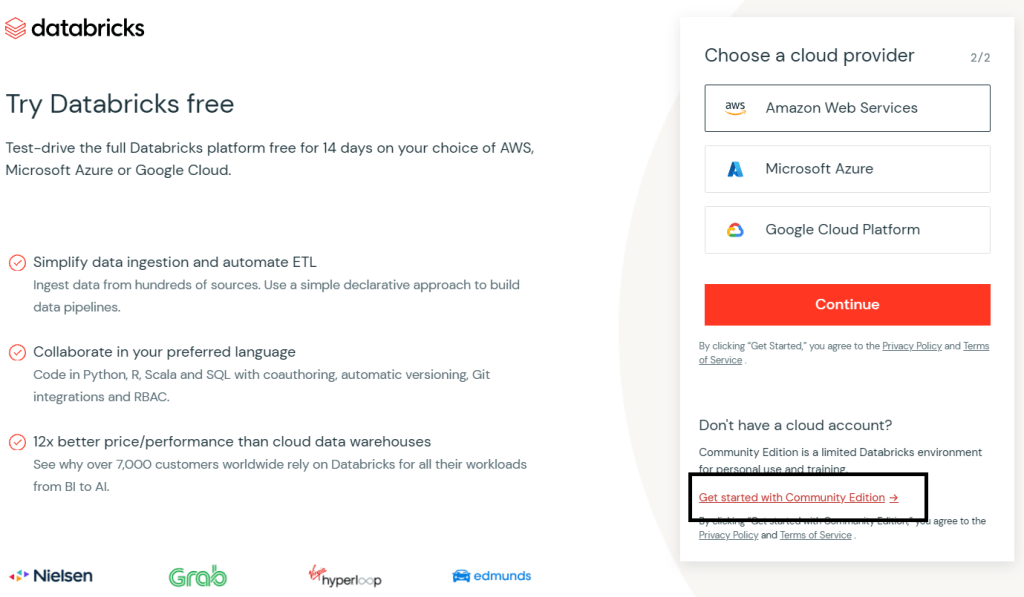
Next, click on continue and this page will show the cloud provider, then click on “Get started with Community Edition“:
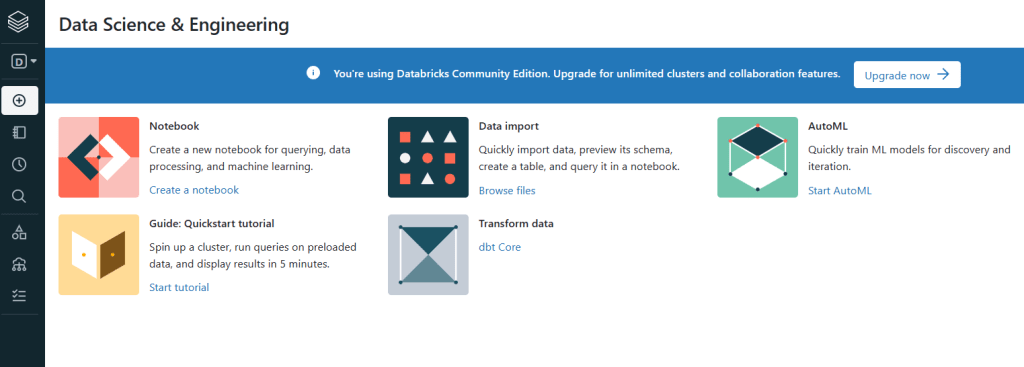
Now, You can start with Databricks, I selected Data Science & Engineering:
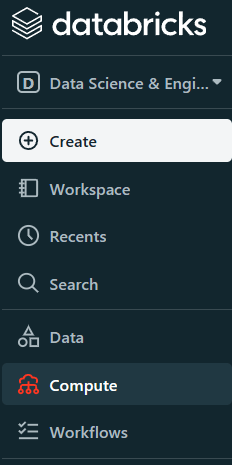
The first step is creating the cluster, to run the code. Click on Compute and select Create Compute:

Create New Cluster:

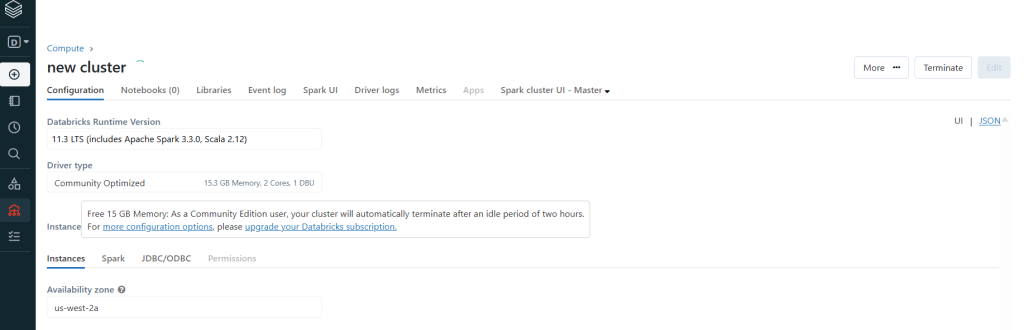
After creating a cluster it will start automatically, but it will stop when not used.
For running codes in the new Notebook, we should start the cluster first.
What is Notebook?
In Azure Databricks, notebooks are the primary tool for creating data science and machine learning workflows and collaborating with colleagues. Databricks notebooks provide real-time coauthoring in multiple languages, automatic versioning, and built-in data visualizations. (More details)
For creating the Notebook, select Create or go to your workspace and right click on the white space and select Create –> Notebook.

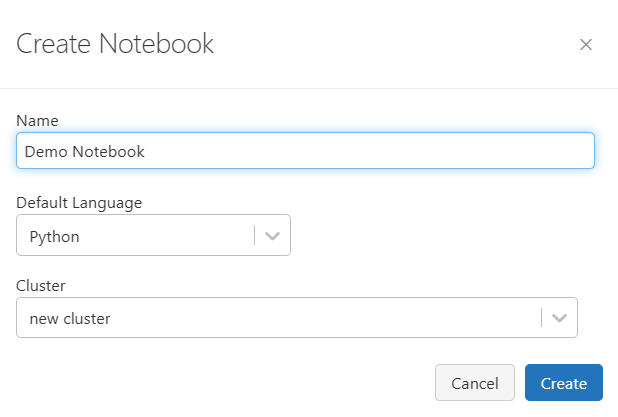
Then Name the Notebook and choose the Language you want to code, then select the Cluster to attach to the Notebook –> Create:
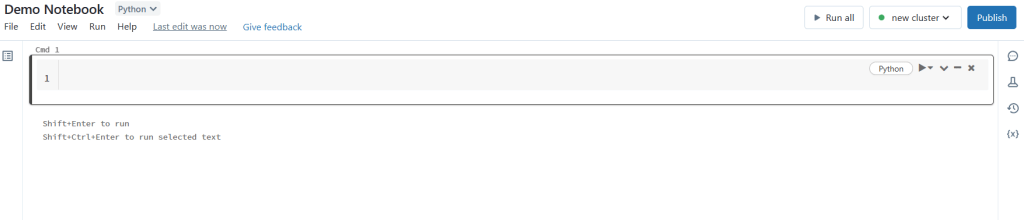
After, you will see the Notebook. In each cmd, you can write the code:
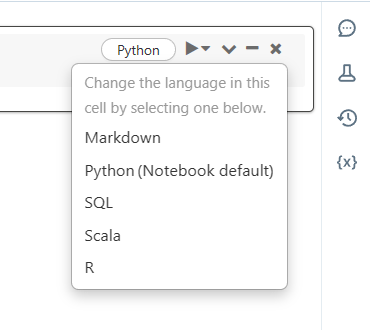
There are Languages you can choose. The beauty of the Notebooks is that you can switch between languages:
I will continue with Databricks in future blog posts.
Comment your thoughts.

 Atefeh BI